Lately, I’ve been seeing the same question come up again and again. In Reddit threads, on client calls, and in my inbox. Do I actually need a website anymore, or is Instagram enough?
And honestly, I get why people are asking. Social media is where conversations happen now. Referrals are strong. AI can spin up a website in an afternoon. So the idea of building a big multi page site can feel unnecessary, or even distracting, when you are already busy running a business.
But here’s what I keep noticing. The businesses that are doing well are not skipping websites altogether. They are simplifying them.
For service based businesses, your website is no longer the first place someone meets you. That usually happens on Instagram, through a referral, or via a quick Google search. Your website is what comes next. It is where people go to decide if you are the right fit. That shift matters, because a website that tries to do everything often ends up doing nothing particularly well.
This is where one page websites come in. Not as a shortcut, but as a strategic choice.
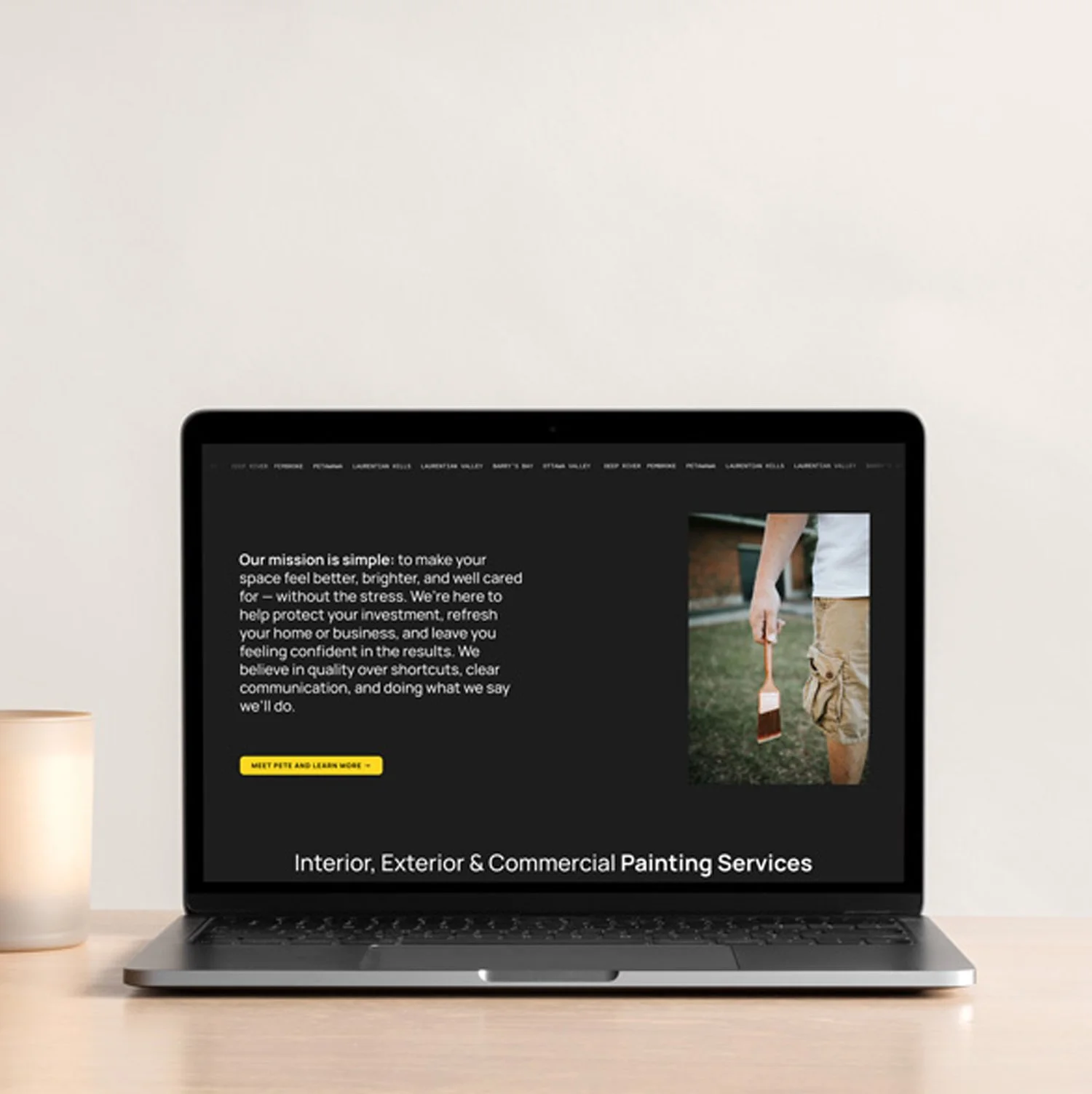
A well designed one page website is focused. It explains what you do quickly, without asking someone to work for the information. It shows who you are for and who you are not for. It builds trust without overwhelming the person reading, and it supports your social media and referrals instead of competing with them. For many service based businesses, that is exactly what is needed.
Most people do not need more pages. They need better structure.
One page websites tend to work especially well when your offer is clear and your goal is straightforward. If you provide one core service or a small set of related services, rely on inquiries or consultations, and already get traffic from social media or word of mouth, simplifying your site can actually improve how it performs. This is one of the main reasons they are becoming so common heading into 2026.
That said, one page websites are not the right solution for everyone. If your business has multiple distinct services, complex booking flows, or a large amount of educational content, a multi page website may still make sense. The important part is not the number of pages. It is whether your website matches how your business actually works.
This is the part people often miss. Your website is not your billboard anymore. It is not there to impress strangers or say everything all at once. It is there to reassure people who are already interested.
Someone finds you on Instagram. They like your work. They click through to your website. In that moment, your site has one job. Make things make sense.
If your website feels confusing, people do not usually tell you. They do not reach out with questions. They simply leave and move on. A one page website that is calm, intentional, and clearly structured will often convert better than a larger site filled with noise.
So yes, you still need a website in 2026. Just not the kind you may have been told you need.
You need a website that supports your marketing, backs up your credibility, helps people decide, and feels aligned with where your business is now. Sometimes that is one page. Sometimes it is more. The answer is not found in a template or a trend. It comes from clarity.
If your website feels like it is doing too much and still not enough, that is usually the sign.
If you are wondering whether a one page website would actually support your service based business, or if your current site just feels off and you cannot quite explain why, you do not need to guess. That is exactly the kind of clarity I help clients find.
Clarity first. Always.
Thinking about simplifying your site?
If you are wondering whether a one page website would actually support your service based business, or if your current site just feels off, you do not need to guess.
That is literally my job.